Multiwfn forum
Multiwfn official website: http://sobereva.com/multiwfn. Multiwfn forum in Chinese: http://bbs.keinsci.com/wfn
You are not logged in.
- Topics: Active | Unanswered
- Index
- » Search
- » Posts by sid
Pages: 1
#1 Quantum Chemistry » FX175-ωPBE in orca » 2026-03-10 09:47:16
- sid
- Replies: 0
Dear members of the community,
I would like to get some information regarding how to perform a ΔUKS calculation with the FX175-ωPBE. I have checked the orca manual but I am bit confused with these functional as its not available in default. Could anyone help me with the input file format. I read that we have to provide the different amounts of Fock exchange (FX) and range-separation parameters. If someone one could shine some information regarding this it would be really helpful. I am trying to use this in Orca 6.1.1.
FYI: I am new to these type of tuning the functions.
Best regards
Sid
#2 Re: Multiwfn and wavefunction analysis » electron-hole visualization » 2026-02-11 11:15:07
Dear Tian,
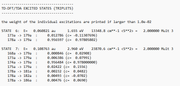
I was performing a triplet-state calculation in ORCA 6.1.1. After the calculation, I can see the TDA excited triplets in the output and in Multiwfn. The problem is that when I try to visualize the second triplet state (State 7). Initially I tried to visualize by NTOs but it did not show any orbital distribution which I can see from the individual molecular orbitals (175a, 174a). As this state involves multiple MOs, I used electron-hole analysis in Multiwfn, and the obtained hole looks exactly like the NTO. There is no distribution similar to 175a and 174a. Then I manually changed the MO contributions and plotted the NTO and hole, which now show a distribution similar to 174a. How to resolve this issue? 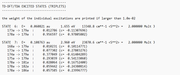
#3 Re: Multiwfn and wavefunction analysis » electron-hole visualization » 2026-01-13 15:09:41
Dear Tian,
Thank you for the suggestion!
Best regards,
Sid
#4 Multiwfn and wavefunction analysis » electron-hole visualization » 2026-01-09 08:50:47
- sid
- Replies: 4
Hi,
I am new to the Multiwfn software and saw this on the Orca forum recently. I would like to ask one question regarding hole-electron analysis. I was able to generate hole and electron cubes using the software. The problem is when I load this to visualization software like GaussView, Avagadro, or ChimeraX, there is only one color for the hole/electron, I don't see any blue-red combinations for the two phases. Is there any way to visualize the electron and hole cubes with the orbital phase difference?
Regards
Sid
Pages: 1
- Index
- » Search
- » Posts by sid